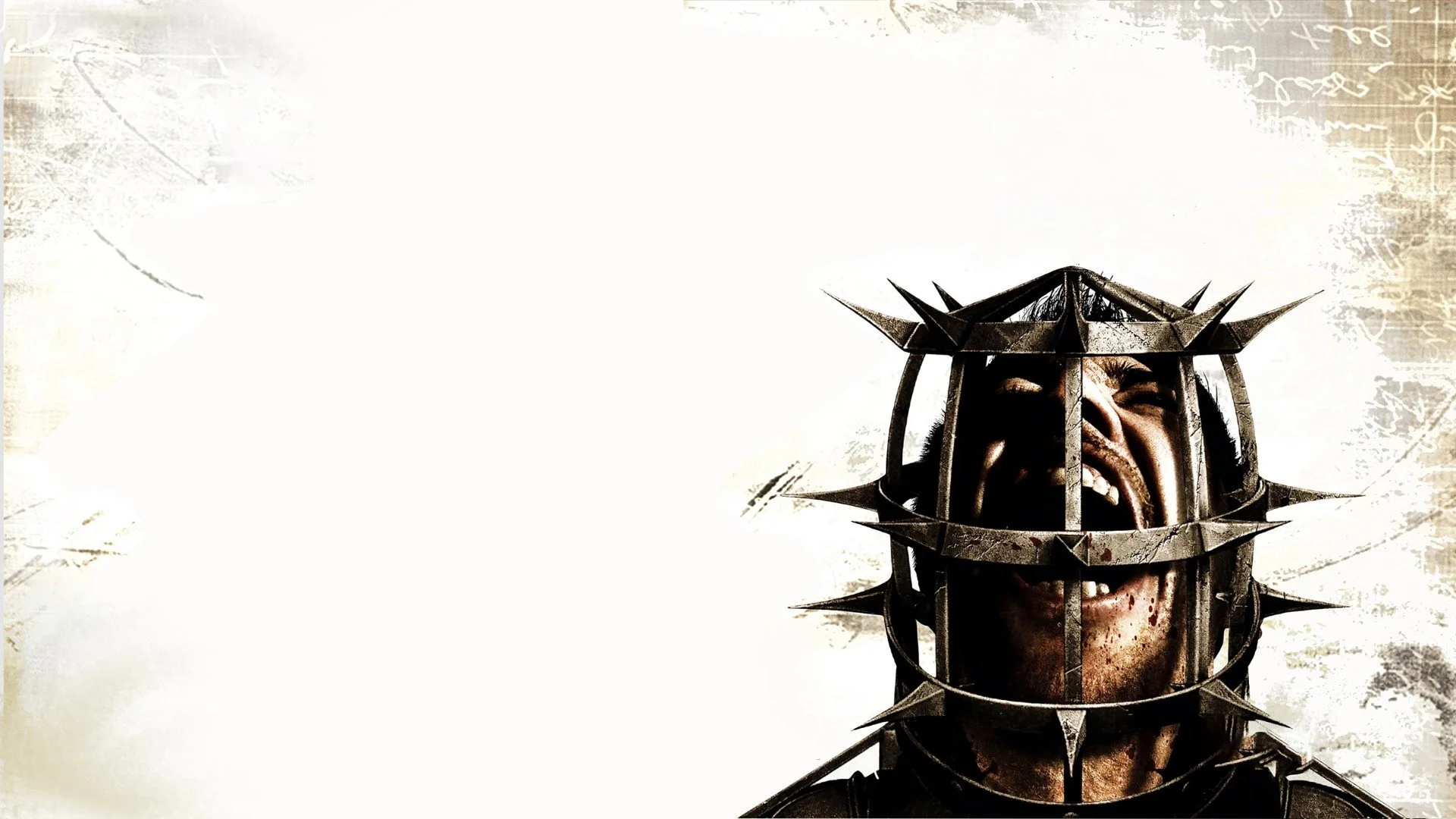
Developer: Zombie Studios | Platform: PS3 | Playtime: 10:35
Timely sequels can be a double-edged sword – on the one hand you have games like The Legend of Zelda: Majora's Mask, a masterpiece in narrative and design that was directly influenced by it's shorter run time. On the other hand you have Saw II, which is just a lot more of the same. Critical reception was a lot worse than the first title (IGN went from 7.5 for the first game to 4.5 for this) but to me it feels one step forward, one step backwards in nearly all of its aspects.
The story follows Michael Tapp, estranged son of Saw game and movie protagonist David Tapp. As far I can tell Michael is a game creation, the journalist who leaked the police investigations of the Jigsaw case. Taking place after the first game's good(??) ending and David's suicide, Michael has been brought into Jigsaw's games. Not to reflect on how his actions have hurt others but to investigate corruption in the police force and how those matters led his dad down the path it did. Because of this, Saw II has a bit more of an active narrative compared to the first, though the general premise of exploring and saving imprisoned people is the same.
Gameplay wise, the structure and general flow is the same, puzzles are better but combat is worse. While the combat in the first game wasn't great, it still relied on a standard but workable Light/Heavy/Block approach with the player having different (but mostly similar) options and durability. Saw 2 swaps this for combat being QTE based. Press the correct button in time and you'll begin to wail on your opponent in three rounds of QTE. Being unarmed requires two lots of this but using a special weapon (Nail Bat or Axe) only requires one successful press. Failing the QTE or getting attacked first puts you in the defence QTE which kind of works like a fishing or golfing power meter for lack of better comparison. It's all serviceable but not in the slightest exciting so it's rather merciful that this game has a fraction of the combat encounters of the first. That being said, there's also a lack of special enemies like shotgun collar enemies, explosive vest enemies, safe heads. The closest you get are four encounters against a spiked brute that work a bit like matador challenges. They're a little jankier than I'd like but there's not many to make it too much of a problem. Combat is so simplified that I don't think there's any barriers to block doors and there's certainly no bombs or anything to make. The occasional trip wire is a one and done affair, problems for exploration rather than combat. Sprinting near one also triggers a QTE (I'm sure you're sensing a pattern here) as does its primary replacement, the collapsing floors. Which also have QTE's. QTE QTE QTE QTE QTE. Think that's out of my system now.
Puzzles overall fare a bit better (and shout out to Jade once again for helping with puzzles), lockpicking is different now and shares a minigame with weapon locker lockpicking, there's two variations of wire puzzles now, a colour based one that I really like and magnetic polarisation one that I really do not like. Each survivor you save has their own unique puzzle which is nice (Unique originally, maybe used later as standard puzzles) but you will sometimes find yourself doing the same kind of puzzle a lot in the game. There are a few returning puzzle types from the first game that help break up the pace, but these are few and far between. The best puzzles come when you're collecting the Billy Puppets.
The game has four kinds of collectibles – Files, Audio Tapes, Puzzle Pieces and Billy Dolls. The first two are always out in the open, just offering exposition and the like. The puzzle pieces reward a keen eye and careful exploration. The Billy Puppets feature once per chapter and come with their own unique puzzle to solve – one could be associating a flag pattern with numbers or in other cases a mix of Chess and Morse Code. The game definitely could have done with a bit more variation like this but I suppose too many risks the game becoming a puzzle title rather than a Horror.
Something that comes up in discussion about this game is the beginning and ending, chiefly how they connect and fetch the rest of the game. The twist, if you can even really call it that, is that the games ending is decided at the end of the tutorial. In the tutorial, you play as a man named Campbell, someone completely unrelated to the wider narrative. You reach a point where you must cross a beam to survive, otherwise the other person will escape. Win or lose, you switch to Michael for the rest of the game until he also reaches this point. This may be a cool reveal but since it happened at the start of the game, you may be annoyed at the result. If you won as Campbell, even if you pass with Michael, you lose. I'm not sure what happens in two losing scenarios or a win for Campbell and Loss for Michael, but a chapter replay defaults as Michael as the winner of the scenario. Neither ending is particularly interesting, Campbell's being incredibly dull and Michael's being a cliffhanger. I understand what the game is trying to do but it isn't well written enough to pull it off, leading to two unsatisfying conclusions. I don't know what the trailers showed but the blurb on the back of the box is generically Saw and the three screenshots show Campbell rather than Michael so I can only imagine this was meant to be a grander reveal but it doesn't really do anything.
Probably the weaker of the two titles, Flesh and Blood (a word play I didn't click with until like a good three quarters the way through) is still at the very least playable and somewhat interesting at times. I wouldn't pay the now extortionate second hand prices for them but morbid curiosity or an interest in the franchise, a couple evenings and a pirated copy and you could probably do worse. That being said, having gone through both titles, I want to play... A different game.
